Kibble Storage for Dogs: Why How You Store Food Matters More Than You Think
If kibble is part of your dog’s daily routine, how you store it matters far more than most people realize.
Once a bag of kibble is opened, the clock quietly starts ticking. Oxygen, heat, light, and humidity begin breaking down fats and sensitive nutrients. Over time, this process can change how the food smells, tastes, and nourishes your dog.
Proper kibble storage for dogs is not just about keeping food tidy. It directly affects freshness, digestion, nutrient availability, and even long-term health.
What Happens to Kibble After You Open the Bag
Kibble is shelf-stable because it is dry, but that does not make it immune to degradation.
After opening:
- Fats begin to oxidize and turn rancid
- Fat-soluble vitamins like A and E degrade
- Moisture exposure can encourage mold or mites
- Flavor dulls, reducing palatability
Dogs often notice these changes before humans do. A sudden loss of interest in food, mild digestive upset, or inconsistent appetite may be the first clue that storage, not the formula, is the issue.
This is why kibble storage for dogs deserves the same attention you give to ingredient quality.
The Best Way to Store Kibble
The simplest method is also the most effective.
Do this:
- Keep kibble in its original bag, which is designed as a grease and oxygen barrier and includes lot codes for recalls.
- Place the entire bag inside an airtight container for added protection from air, moisture, and pests.
- Store in a cool, dark, dry location such as a pantry or cupboard, not a garage or laundry room.
- Keep food off the floor and away from heat-producing appliances or windows.
- After each scoop, squeeze excess air out of the bag and reseal tightly.
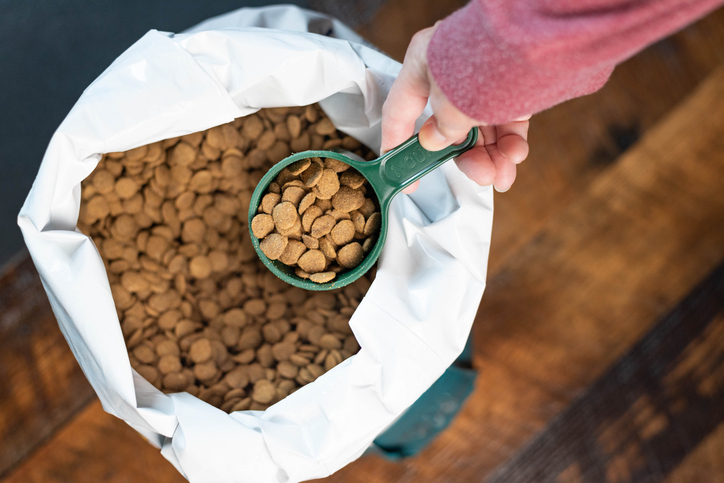
- Use a clean, dry, stainless-steel scoop, and store it outside the bag between uses.
This approach balances food safety, freshness, and recall protection, which is why it is the gold standard for kibble storage for dogs.
What Not to Do With Kibble
Some common storage habits actually speed up spoilage.
Avoid these mistakes:
- Pouring loose kibble directly into a bare bin. Oils coat the container and accelerate rancidity.
- Topping off new kibble on old crumbs. Always empty, wash, and fully dry the bin before adding fresh food.
- Storing kibble near heat or steam, such as next to a dishwasher, dryer, or in a warm garage.
- Ignoring spills or dust. Oily residue attracts pests and encourages spoilage.
Small oversights compound quickly when it comes to kibble storage for dogs.
How Long Is Kibble Fresh After Opening?
Most kibble is best used within four weeks of opening.
This does not mean it becomes dangerous immediately after that window, but nutrient loss and fat oxidation increase over time. Buying bag sizes that match your dog’s consumption rate is one of the easiest ways to protect freshness.
If your dog eats slowly, smaller bags are often the better choice, even if they cost slightly more per pound.
Freshness Checks You Can Do at Home
Your senses are powerful tools.
Smell:
A stale, paint-like, or “old nuts” odor can indicate rancid fats.
Look and feel:
Clumping, dampness, stickiness, or excessive dust suggest moisture exposure or degradation.
Behavior:
Sudden pickiness, gas, or loose stools can sometimes trace back to compromised kibble.
When in doubt, replace the food. Good kibble storage for dogs reduces waste, but feeding compromised food is never worth the risk.
The Risks of Improper Kibble Storage
Poor storage does more than reduce quality.
Digestive upset:
Rancid fats can irritate the gut, leading to gas, diarrhea, or vomiting.
Nutrition shortfalls:
Degraded vitamins mean your dog may not receive the nutrition listed on the label.
Contamination hazards:
Moisture encourages mold and storage mites, increasing the risk of allergic reactions or exposure to mycotoxins.
Pest attraction:
Unsealed kibble can attract ants, cockroaches, and rodents, which can contaminate food and spread disease.
From a longevity perspective, these risks are avoidable with proper kibble storage for dogs.
Why Storage Matters for Long-Term Health
Nutrition is not just about what you buy. It is about what actually reaches your dog’s bowl in usable form.
Even a high-quality kibble loses value if fats oxidize and vitamins degrade before feeding. Over time, chronic exposure to compromised food can quietly contribute to inflammation, digestive strain, and inconsistent nutrient intake.
Protecting freshness protects health.
Longevity Tip
To protect your dog’s health, practice proper kibble storage for dogs by keeping food in its original bag inside an airtight bin, stored cool and dry. Buy only what you will use in about four weeks, seal after every scoop, and always use a clean, dry scoop. These simple habits preserve nutrients, prevent rancidity, and reduce exposure to pests and mold, supporting both daily digestion and long-term wellbeing.