If you’ve recently adopted a rescue dog or brought home a puppy without a clear medical or genetic history, there is one test that deserves immediate attention. MDR1 testing for dogs is a simple, affordable step that can prevent serious and even life-threatening medication reactions.
Many dog parents have never heard of the MDR1 gene mutation until something goes wrong. Unfortunately, by the time symptoms appear, the consequences can be severe. Knowing your dog’s MDR1 status ahead of time allows your veterinarian to make safer, informed decisions throughout your dog’s life.
What Is the MDR1 Gene Mutation?
MDR1 stands for multi-drug resistance 1. This gene plays a critical role in how a dog’s body transports certain medications out of the brain.
In dogs with the MDR1 mutation, this protective mechanism does not function properly. As a result, specific drugs that are normally safe can accumulate in the brain and nervous system at toxic levels.
This is why MDR1 testing for dogs is not just about genetics. It’s about medication safety.
Why MDR1 Testing for Dogs Is So Important
Dogs with the MDR1 mutation may have severe reactions to medications commonly used in veterinary care. These reactions can include:
- Disorientation and tremors
- Loss of coordination
- Seizures
- Coma
- In extreme cases, death
Drugs that can be dangerous for MDR1-positive dogs include ivermectin, certain antibiotics, chemotherapy agents, and some sedatives or anesthetics. These medications may be used routinely for parasite prevention, surgery, or dental procedures.
Without MDR1 testing for dogs, a veterinarian may unknowingly prescribe or administer a drug that poses a serious risk.
Dogs Most at Risk for the MDR1 Mutation
The MDR1 mutation is most commonly found in herding breeds and their mixes. Dogs at higher risk include:
- Collies
- Australian Shepherds
- Shetland Sheepdogs
- Border Collies
- German Shepherds
- Long-haired Whippets
- Mixed-breed dogs with herding ancestry
Roughly one in four Collies carries two copies of the mutation, placing them at the highest risk. Dogs with just one copy may still experience adverse reactions, though symptoms may be less severe.
Because mixed-breed dogs often have unknown lineage, MDR1 testing for dogs is especially important for rescues and adopted dogs with incomplete histories.
Why Unknown Medical History Raises the Stakes
When a dog’s background is unknown, veterinarians must make educated guesses about genetic risk. This can complicate treatment decisions, especially in urgent situations.
Testing removes uncertainty. When your dog’s MDR1 status is documented, your veterinary team can:
- Avoid unsafe medications entirely
- Adjust dosages appropriately
- Choose alternative drugs that are safer for MDR1-positive dogs
This information becomes part of your dog’s permanent medical record, protecting them for years to come.
How MDR1 Testing for Dogs Works
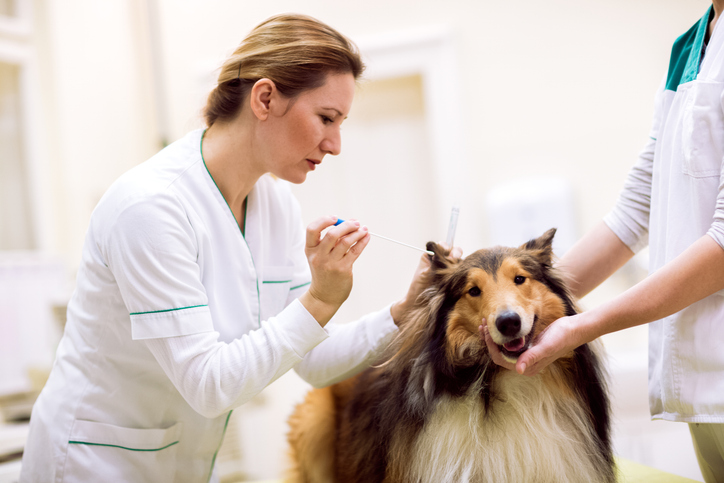
MDR1 testing is straightforward and non-invasive. Most tests use a simple cheek swab to collect DNA.
You have two main options:
Through your veterinarian
Your vet can order the test, submit the sample, and interpret the results with you. This option integrates seamlessly into your dog’s medical record.
At-home DNA kits
Many reputable dog DNA tests include MDR1 testing as part of a health screening panel. Be sure to select a kit that includes health markers, not just breed identification.
Results typically indicate whether your dog has:
- No copies of the mutation
- One copy (carrier)
- Two copies (high risk)
What to Do If Your Dog Tests Positive
A positive result does not mean your dog is unhealthy. It simply means their care needs to be tailored more thoughtfully.
With MDR1 testing for dogs, your veterinarian can:
- Choose alternative medications
- Adjust anesthesia protocols
- Safely manage parasite prevention
- Avoid emergency complications
Many MDR1-positive dogs live long, healthy lives with no issues once their status is known.
A Preventative Care Perspective
Preventative care is about identifying risks before they become emergencies. MDR1 testing for dogs is one of the clearest examples of how proactive genetics can save lives.
Even routine procedures, such as dental cleanings or minor surgeries, involve medications that could be dangerous for MDR1-positive dogs if their status is unknown. Testing removes that risk.
Longevity Tip
Genetic insight empowers safer care. By testing for MDR1 early, especially in dogs with unknown histories or herding ancestry, you protect your dog from preventable medication reactions and support safer veterinary care throughout their life.
Peace of mind is a powerful part of longevity.
Further Readings