What Your Dog’s Poop Means for Long-Term Health
What your dog’s poop means is one of the most overlooked yet powerful health signals available to dog parents. Many people focus on food labels, supplements, and lab results, but few are taught how to interpret what comes out the other end. Stool reflects digestion, inflammation, microbiome balance, nutrient absorption, and even emotional stress.
Your dog produces stool every day, which makes it a real-time health report. Subtle changes often appear here long before larger symptoms like vomiting, weight loss, skin issues, or lethargy show up. Learning what your dog’s poop means can help you catch imbalances early and support better long-term health.
This is not about obsessing. It is about becoming familiar with your dog’s normal so changes stand out clearly.
Shape and Consistency: The First Clue
One of the clearest indicators of what your dog’s poop means is shape and consistency. Ideal stool is log-shaped, moist but formed, and easy to pick up. It may be one piece or segmented, but it should hold its shape without being hard or crumbly.
When stool is too firm or dry, often appearing as small pellets or very stiff logs, it may point to dehydration, low dietary fiber, or insufficient moisture in food. In some dogs, overly firm stool can also be linked to low fat intake, highly processed diets, or even discomfort during defecation related to anal gland issues or arthritis.
Loose or unformed stool tells a different story. Pudding-like piles, splatters, or cow-pat consistency can indicate food intolerance, sudden diet changes, gut dysbiosis, parasites, inflammation, or stress. Chronic soft stool may also suggest pancreatic insufficiency or poor nutrient absorption.
Frequent swings between hard and soft stool often signal an unstable microbiome, inconsistent fiber intake, or ongoing emotional stress. These patterns are especially important when evaluating what your dog’s poop means over time.
Color Changes and What They Can Signal
Color is another key piece of understanding what your dog’s poop means. Healthy stool is typically chocolate brown.
Yellow or orange stool may suggest bile imbalance or liver stress. Green stool can be linked to gall bladder issues or simply eating grass, especially if it appears temporarily. Black stool is more serious and may indicate bleeding in the upper gastrointestinal tract, which requires immediate veterinary attention.
Red streaks or blood can point to bleeding in the lower GI tract or small cuts around the anus. Grey or greasy stool often suggests fat malabsorption or pancreatic issues and should not be ignored.
While one off-color stool can happen, repeated color changes are an important signal worth investigating.
Frequency and Volume Matter Too
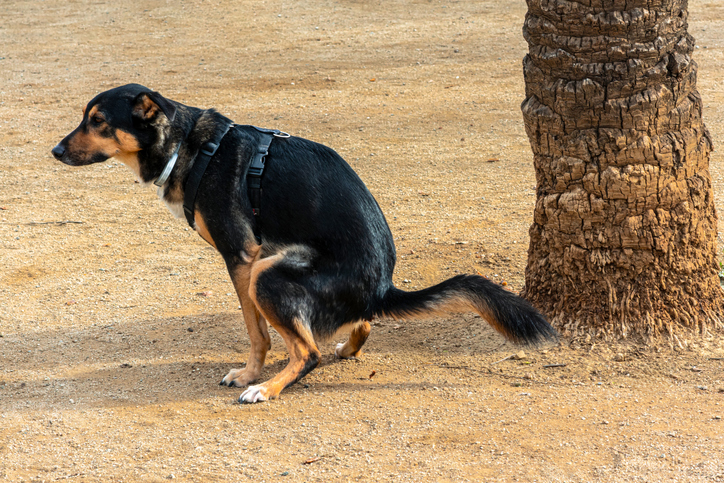
How often your dog poops and how much they produce also helps explain what your dog’s poop means. One to two well-formed stools per day is ideal for most dogs.
Very large volume or frequent bowel movements may indicate malabsorption or diets high in fillers that pass through without providing much nutrition. On the other end of the spectrum, infrequent stools or skipping days can suggest dehydration, low fiber intake, reduced gut motility, or early constipation. This is especially common in older or less active dogs.
Patterns are more important than isolated days. Watching trends helps you understand what is normal for your dog.
What’s Inside the Stool Tells a Story
Beyond shape and color, content offers additional clues about what your dog’s poop means. Mucus often signals inflammation, especially when paired with loose stool. Undigested food particles may point to poor digestion or food moving too quickly through the gut.
Visible parasites or rice-like segments can indicate worms and require veterinary care. These findings should always be taken seriously, even if your dog seems otherwise well.
What You Can Do to Support Healthier Stool
If you want to improve what your dog’s poop means over time, small changes can have a big impact. Keeping a simple poop journal during diet changes or when introducing supplements can help you spot trends early.
Gentle fiber sources can support stool quality and microbiome balance. Options include cooked pumpkin, soaked chia seeds, psyllium husk, steamed green beans, or mashed sweet potato. Introduce these slowly and in small amounts.
Canine-specific probiotics with strains like Lactobacillus acidophilus and Bifidobacterium animalis may also help stabilize digestion. Some dogs tolerate tiny amounts of fermented foods like unsweetened kefir or sauerkraut, but these should be used cautiously and introduced gradually.
A Longevity-Focused Takeaway
What your dog’s poop means is not gross or trivial. It is one of the most accessible windows into gut health and long-term wellbeing. Taking a quick look during daily walks can reveal patterns that help you intervene before small issues become bigger problems.
Even snapping a weekly photo of stool can be useful, especially during diet transitions. Over time, patterns emerge. Those patterns often tell the story long before symptoms do.
Healthy digestion supports immunity, mood, nutrient absorption, and aging. Paying attention to stool is one of the simplest ways to support your dog’s health from the inside out.