Why Winter Paw Care for Dogs Matters More Than You Think
Winter paw care for dogs is often overlooked, yet paws take the brunt of cold-weather stress. During winter walks, your dog’s paws are exposed to freezing temperatures, abrasive ice, drying winds, and chemical residues that can quietly cause irritation and damage. Unlike fur-covered areas, paw pads have limited protection and are in constant contact with the ground.
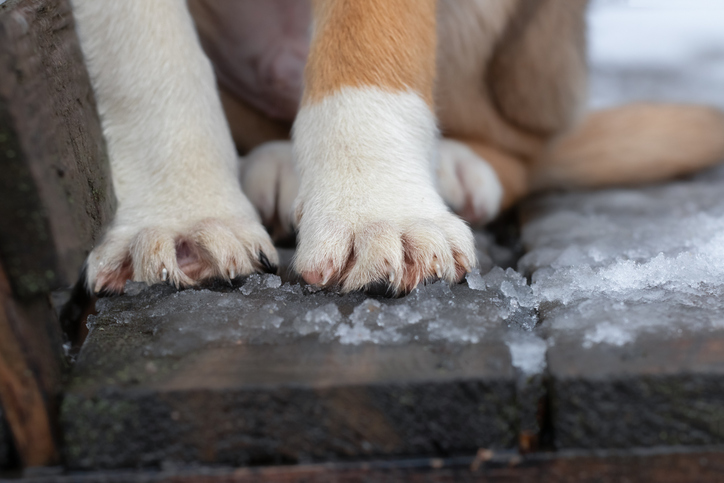
Salt and ice-melt chemicals used on sidewalks and roads can burn sensitive paw pads and trigger inflammation. Dogs often ingest these substances when they lick their paws after a walk, adding another layer of concern. Snow and ice can also collect between toes, especially in long-haired breeds, leading to discomfort and excessive licking.
Dry winter air compounds the problem by pulling moisture from the skin, increasing the risk of cracking and peeling. Small ice shards can even create micro-cuts that allow bacteria or yeast to enter. A simple, consistent routine can make a meaningful difference in preventing these issues before they escalate.
Common Winter Paw Problems to Watch For
Understanding what winter conditions do to paws helps explain why winter paw care for dogs is so important. De-icing salts and chemicals can cause redness, burning, and sensitivity. Snowballs forming between toes may tug at the skin and fur, creating soreness and encouraging licking.
Cold, dry air weakens the natural skin barrier, making pads more prone to splitting. Repeated exposure to ice and rough surfaces can create tiny abrasions that are easy to miss but slow to heal. Over time, these small stressors add up, leaving paws vulnerable throughout the season.
A 5-Minute Winter Paw Care Routine
This routine is designed to be quick, realistic, and easy to stick with even on busy days.
Before the Walk
1. Apply a Paw Balm
Think of paw balm as lip balm for your dog’s feet. A good balm creates a protective barrier that helps shield pads from salt, ice, and cold. Look for ingredients like beeswax, vitamin E, calendula, shea butter, or coconut oil. Products such as Musher’s Secret or Paw Soother are commonly used because they are formulated specifically for dogs.
2. Trim Fur Between Paw Pads
Excess fur between the pads traps snow and ice. Keeping this area neatly trimmed reduces snowball formation and minimizes post-walk licking. This small step alone can dramatically improve comfort for long-haired or fluffy-footed dogs.
After the Walk
3. Quick Rinse or Wipe
Use warm water or a damp cloth to gently remove salt, ice melt, and debris. This is one of the most effective steps in winter paw care for dogs and takes less than a minute.
4. Pat Dry Gently
Dry paws by patting rather than rubbing. Rubbing can irritate already sensitive skin and worsen micro-abrasions.
5. Reapply Paw Balm
If the pads feel rough, dry, or flaky, apply another light layer of balm. This helps restore moisture and supports the skin barrier overnight.
Additional Winter Paw Care Tips
Some dogs benefit from booties, especially on heavily salted sidewalks or during extreme cold. While not every dog loves them, they can offer excellent protection when conditions are harsh.
If you manage your own driveway or walkways, choose pet-safe ice melt products whenever possible. These are less irritating and reduce the risk if your dog licks their paws.
For dogs prone to snowballs, lightly spritzing a pet-safe detangler on leg and paw fur before walks can help prevent ice from clumping between toes.
What’s Normal vs. What Needs Attention
It is normal to see slight dryness, a rougher pad texture from daily wear, or occasional licking after snowy walks. These signs often resolve quickly with basic care.
Signs that need intervention include cracks that bleed, persistent redness or swelling, limping, ongoing licking, or a strong paw odor. Odor can indicate fungal or bacterial overgrowth and should be addressed promptly.
Being familiar with your dog’s normal paw appearance makes it easier to notice subtle changes early.
A Conscious Canine Takeaway
Winter paw care for dogs does not need to be complicated to be effective. If you add only one habit this season, make it a quick paw wipe after every walk. This simple step removes irritants before they can cause damage and helps keep paws healthy, comfortable, and resilient all winter long.
Consistent, gentle care protects your dog’s paws and supports their overall comfort during the coldest months of the year.