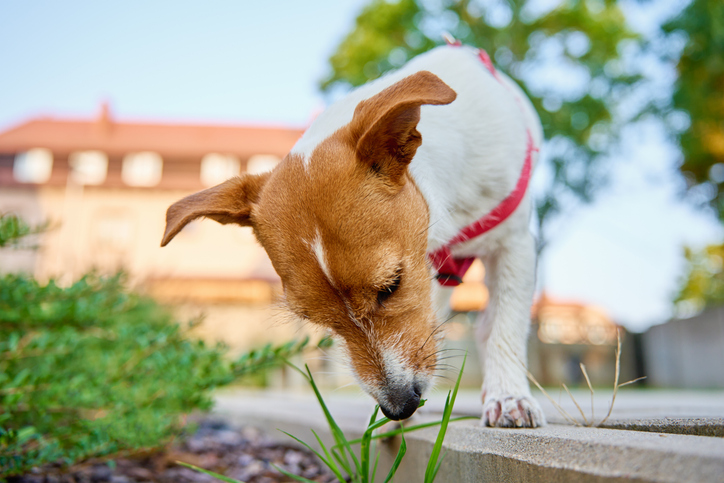
Every time your dog lowers their nose to the ground, they are accessing a world of information far richer than anything we experience through sight or sound. Scents tell stories. Who passed through recently, which animals were nearby, what they ate, and even subtle emotional signals left behind.
For dogs, scent is their primary sense and their primary language. This is why sniff work for dogs is not just a fun activity. It fulfills deep biological, cognitive, and emotional needs that are essential for long-term wellbeing.
When dogs are given regular opportunities to sniff, explore, and investigate their environment through scent, they experience meaningful mental engagement that goes far beyond physical exercise alone.
Why Sniff Work for Dogs Is So Powerful
A dog’s olfactory system is extraordinarily advanced. The part of the brain dedicated to processing scent is estimated to be dozens of times larger than ours. This means that sniffing delivers intense cognitive stimulation.
Sniff work for dogs provides a form of mental exercise that can be just as tiring and satisfying as a long walk or play session. Engaging the nose helps burn mental energy, encourages problem-solving, and may help regulate stress responses by lowering cortisol levels.
This is especially important for dogs who struggle with anxiety, reactivity, or overstimulation. Sniffing allows the nervous system to settle and shift out of constant alert mode.
Emotional and Behavioral Benefits
Sniff work for dogs taps into natural foraging and exploration instincts. When a dog searches for a scent or uncovers a hidden treat, the brain releases dopamine. This creates a sense of reward, accomplishment, and calm satisfaction.
Over time, regular sniff work may help:
- Reduce boredom-related behaviors like chewing or barking
- Improve focus and impulse control
- Support emotional regulation in anxious dogs
- Build confidence in fearful or sensitive pups
Because sniff work allows dogs to work independently at their own pace, it can be deeply empowering, especially for dogs who feel overwhelmed by fast-paced environments.
Gentle Physical Benefits
While sniff work is primarily mental, it also offers physical advantages.
Sniff mats and scent games encourage light pawing, shifting weight, and gentle movement without high impact. This makes sniff work for dogs especially valuable for senior dogs, dogs recovering from injury, or dogs with joint sensitivity.
On walks, dedicated sniff breaks naturally slow the pace. This reduces strain on joints while still allowing meaningful engagement with the environment.
Simple Ways to Add Sniff Work to Daily Life
You do not need specialized training or equipment to begin incorporating sniff work for dogs. Small, intentional changes can make a big difference.
Sniff Stops on Walks
During your regular walk, pause every five to ten minutes and allow your dog two to three minutes of uninterrupted sniffing. Keep the leash loose, stay quiet, and let your dog choose where to investigate.
Aim for three to five sniff stops per outing. This practice can be especially helpful for reactive dogs, as it gently redirects focus away from triggers and toward scent exploration.
Sniff Mats and Snuffle Toys
Sniff mats and snuffle toys are designed to hide small treats within folds of fabric. Your dog uses their nose to search and extract the rewards.
For best results:
- Start with easy setups and gradually increase difficulty
- Offer sniff mat sessions for ten to fifteen minutes, two to three times per week
- Supervise early sessions to ensure safe use
As dogs become more skilled, denser mats or more challenging hiding spots can keep sniff work engaging and rewarding.
Choosing Safe and Clean Sniff Tools
When selecting enrichment tools, quality and safety matter.
Choose sniff mats and toys that:
- Are made from non-toxic materials
- Are sturdy and resistant to tearing
- Offer multiple treat-hiding areas
- Are easy to wash and dry
Regular cleaning is essential. Food residue and moisture can turn enrichment tools into bacterial hotspots if neglected. Washing mats routinely keeps sniff work for dogs both enriching and hygienic.
A Longevity-Focused Perspective
Sniff work for dogs is one of the simplest and most underutilized forms of enrichment. It supports brain health, emotional balance, stress reduction, and confidence building across all life stages.
As dogs age, mental stimulation becomes just as important as physical activity. Regular sniff work helps keep the brain engaged, curious, and adaptable, which may play a role in maintaining cognitive health over time.
By making space for sniffing, you are honoring your dog’s natural instincts and giving them a richer, more meaningful experience of the world.
Sometimes the most powerful form of care is also the simplest. A few extra minutes of sniff time can transform an ordinary day into one that truly meets your dog’s needs.
More Resources